dark matter essay
(C) 2013
  • about
    • values
    • competences >
      • china
      • intellectual property >
        • What is original?
        • talks & lectures
      • work & vocation
      • personal and organizational development >
        • definitions and techniques
        • syst lexicon
        • projection #1
        • projection #2
        • projection #3
  • blog
  • book reviews
    • Boy by Roald Dahl
    • Digital Dementia by Manfred Spitzer
    • Evolution's Meaning and Objective by Pierre Teilhard de Chardin
    • Focus - The Hidden Driver of Excellence by Daniel Goleman
    • Going Solo by Roald Dahl
    • Homo Deus by Yuval N. Harari
    • Iron John by Robert Bly
    • Irresistible by Adam Alter
    • Reinventing Organizations by Frederic Laloux
    • Steve Jobs by Walter Isaakson
    • The Idle Parent by Tom Hodgkinson
    • The Great Disruption by Francis Fukuyama
    • The Monk Who Sold His Ferarri by Robin Sharma
    • The Organized Mind by Daniel Levitin
    • The Practice of the Wild by Gary Snyder
    • The God of Small Things
    • Weltentwerfen by Friedrich Boerries
    • Where good ideas come from by Stephen Johnson
    • World Order by Henry Kissinger
  • film reviews
    • Alphabet (2013)
    • Andrea lässt sich scheiden (2024)
    • Around the World in 80 Days (1956)
    • Bad Santa (2003)
    • Captain Fantastic (2016)
    • Concussion (2016)
    • Demain | Tomorrow
    • East is East (1999)
    • Her (2013)
    • Kinsey (2004)
    • Laura Croft II - The Cradle of Life
    • Le Planete Sauvage (1973)
    • Pope Francis by Wim Wenders
    • Suzaku (1997)
    • SIlence (2016)
    • The Challenges of Rudolf Steiner (2011)
    • The Program (2015)
    • The Salt of the Earth (2014)
    • The Straight Story (1999)
  • topic essays
    • anthropology >
      • on economics >
        • Do we reward our contributions to society the way we should?
        • International Tax Evasion
        • capitalism
        • on profit, passion & purpose
      • on humor
      • on politics >
        • zur lage der nation: le grand peur II
        • Analyse NR Wahl 2013
        • zur lage der nation
        • Wutbürger - anger citizens
        • World Order - Book Review
      • Identity: Warum mich Trachten entfremden
      • on gender and sexuality
      • on religion
    • art
    • creativity >
      • Transforming the IP System
    • education >
      • Mindful Parenting
      • Alphabet - Documentary Review
      • Henry Kissinger on Education
      • learning environment
      • Musicalized - Rich Music for Poor Times
      • screen education
      • Sting on how he became to be what he is and creativity
      • On Bi- and Multilingual Instruction
      • A Playground of Growth
      • On Procrastination
    • neurology >
      • On Football and Oxytocin
    • on nutrition
    • psychology >
      • algorithm of love
      • art of loving
      • applied virtues
      • emotional intelligence
      • grundformen der angst
      • grit - key to success
      • happiness
      • on love and grief
      • triangular love
      • yale intro to psychology
    • quotes worth quoting
    • sports >
      • kiting
      • yoga
      • squash
    • writing
  • travel essays
    • one step into camino frances
    • journey to the center of the earth
    • Alto Adige - An Example how European Integration can Succeed
    • on the friendship highway
    • en viaje de andalusia
    • sawasdee krub - a quiet holiday in thailand
    • Viking Myths and Hanseatic Harmony
    • How Airbnb Explains Bureaucratic Futilism and Why the Chinese hukou System Could be a Solution to the European Migration Crisis
    • On Slovenia and Integration or Isolation in Post Nationalist Europe
    • who moved my swiss cheese?
    • On Taiwan and its Identity Crisis
    • On Nippon Sakoku
    • Expectations of and Deliveries in Down Under
    • Silence on Kumano Kodo
    • Zwischen der pannonischen und mandschurischen Ebene treibend
    • Thoughts on Freedom and Order While Dozing in Berlin
    • On Interrail and Climate Ticket
    • On Morroco, Islam and Faithfulness
  • contact

In Observance of the 100th Anniversary of Marcel Duchamp Exhibiting the “Fountain”: On the Purpose of and Compassion in Art

10/22/2017

1 Comment

 
Picture

Shanghai, Oct 20, 2017. I sit with 20 other folks on the 9th floor of 33 Chengdu Middle Road in the gallery of Hu Renyi, a Suzhou born, Shanghai educated, adjunct professor at New York School of Visual Art. He has volunteered to answer the hard questions about art and gives us a 75’ presentation of a few recent art projects, e.g. Longtang Clan, a performance art piece taking on the Lei Feng character, who has been instrumentalized ever since Mao Zedong invented him, to foster nationalism amongst Chinese subjects; or Confession Room, a subversive persiflage of China’s long tradition to force system dissidents into public confessions. All art work shown is of poor craftsmanship, the shown videos of disturbingly bad quality, performances ludicrous, sound design abhorrent, and mostly in disguised conflict with the Chinese regime.
 
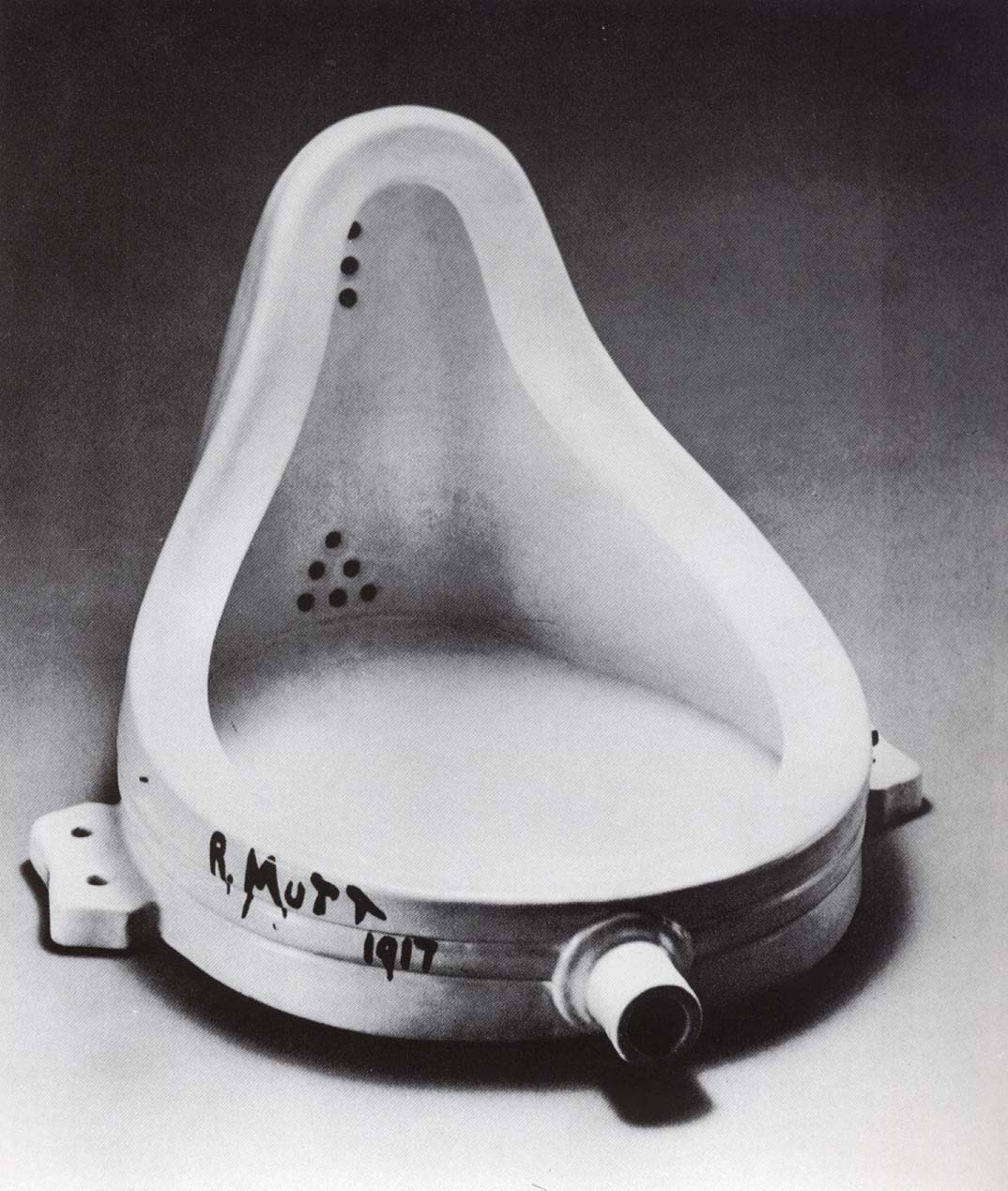
Since I expected a serious conversation about the purpose and essence of art, the Fountain crosses my mind. It is porcelain urinal which the French artist Marcel Duchamp exhibited first time in 1917, exactly a century ago in New York, and is widely viewed as the starting point of modern art and the understanding that everything can be art. Duchamp described his intent with the piece was to shift the focus of art from the physical craft to intellectual interpretation. Hu Renyi’s artwork has only this effect: it stimulates intellectually, if at all.
 
Philosopher Stephen Hicks argued that Duchamp wanted to make with the Fountain a provocative statement. The artist is not a great creator – Duchamp went shopping at a plumbing store. The artwork is not a special object – it was mass-produced in a factory. The experience of art is not exciting or ennobling – at best it is puzzling and mostly leaves one with a sense of distaste. I couldn’t write anything more fitting about Hu Renyi’s art. The artist is a poor creator – Hu Renyi uses mostly plastic waste and plastic products to create objects of no aesthetic value. The experience of art is not exciting or ennobling – it is irritating and certainly leaves a sense of distaste. I admit though: beauty is in the eye of the beholder and de gustibus disputandum sunt.
 
The purpose of art was my starting point and this is where I have to return to. It is, in my understanding, similar to education, psychotherapy, management and religion the transformation of human beings towards more self awareness and thus well being. It shall enlighten the shadows of one’s personality, open one’s identity for new perspectives and thus facilitate healing and atonement. It can do such magic both for the artist as well as for the spectator.
 
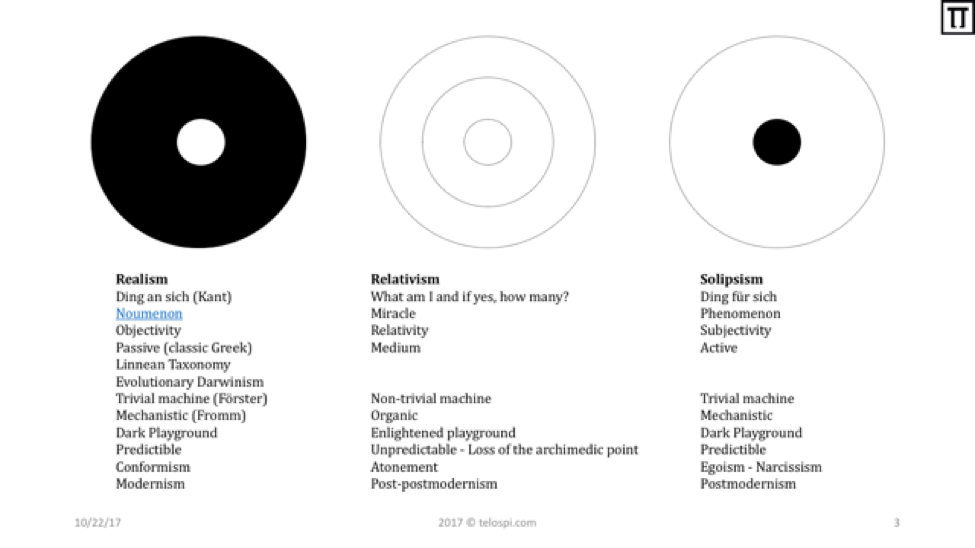
Sadly, most artists are solipsists and thus constitute the anti-thesis of many realist academics: they create from only one perspective, which is their persona, not their self, whereas academics create from only one perspective, which is the object of their investigation. True artists will agree with me, that an artist ought to be a relativist, somebody who oscillates between the object and the subject in correspondence with his audience. It is this triangular relationship which most academics and artists have lost, although it seems so obvious that both academic research and artistic creation are merely two forms of communication and as such a means to an end.
 
The purpose of communication is the transfer of either information, knowledge or wisdom and shall in any case result in consciousness increase. Art and science which fails to create meaning is deprived of value. Mats Alvesson described this problem for academic in Return to Meaning: A Social Science with Something to Say and it is high time that some courageous art critic does the same for the art world.
 
Relativist art taps into the self, the infinite source of beauty, knowledge and compassion. Beauty is the obvious one: art which touches us aesthetically is easily recognized. Art which succeeds to increase our knowledge in an ingenious way, like a graphic visualization can bring understanding to an entire book written on a complex subject, shifts the focus like Duchamp’s Fountain from craftsmanship to intellectual understanding. It is though art which is compassionate, i.e. which bridges in the object (art work) one subject (artist) with the other (spectator), which deserves true admiration. The purpose of art is thus the sensation of being touch with the self that connects us all; and I believe that a piece of truly beautiful (e.g. Rene Magritte) and knowledgeable (e.g. Stephen Willats) art does always possess this quality of compassion.
 
Hu Renyi’s artwork does not. It is without question not beautiful and not knowledgeable; but above all it lacks compassion. Quite on the contrary does he ridicule both the Chinese people as well as the Chinese government for practicing admittedly self damaging rituals. But instead of pointing out their self damaging nature, he abuses his own people for the creation of meaningless “art” work. And by focusing in all his work on criticizing Chinese culture in general and Chinese governance in particular, he reveals that he has not managed to separate himself therefrom and thus assimilates himself therewith despite trying desperatly to be different. coincidentia oppositorum: the opposites conincide with each other. Hu reminds me in a way of one of my sinology professors who had specialized in analyzing Mao Zedong’s thinking and strategy, and was oblivious to the fact, that she ran her institute in the same tyrannical way her object of study ran an entire country.  
 
Let’s try to apply a scaling questions to confirm my assessment. If we agree that art is a means to an end, i.e. a form of communication between artist and spectator, then we could engage in a quantitative survey and ask any museum visitor to give us after looking at a piece of art work a feedback about his impression. We would only ask for a value between 0 and 10, 0 for no and 10 for the best impression; and we would include in this one value beauty, craftsmanship, knowledge and compassion. We could repeat this question a month later and a year later and would values which are blurred by the remembering self and the being self, but that's just how things are. I believe though that compassionate art, one which emanates perceptible beauty or accessible knowledge would also after one year receive a higher average score than “art” work which has been created without compassion.

What is art? Can’t be answered therefore with this or that, with yes or no. It is subject to a measurement of its impact and thus if it rather succeeded or failed to communicate meaning. I believe that such an “customer” based evaluation of art similar to movies, restaurants or physicians, packed into an app like tripadvisor, would surely help artists to understand their purpose in society and shape their return to meaning.
Picture
Further Reading:
  • Return to Meaning: A Social Science with Something to Say by Mat Alvesson
  • The Unity of Opposites: coincidentia oppositorum
1 Comment

Astronomers Find Half of Missing Ordinary Matter - Dark Matter Remains a Mystery.

10/16/2017

0 Comments

 
Picture
The Guardian reports that astronomers have found half of missing ordinary matter - dark matter remains a mystery. It is one of cosmology’s more perplexing problems: that up to 90% of the ordinary matter in the universe appears to have gone missing. Now astronomers have detected about half of this missing content for the first time, in a discovery that could resolve a long-standing paradox.

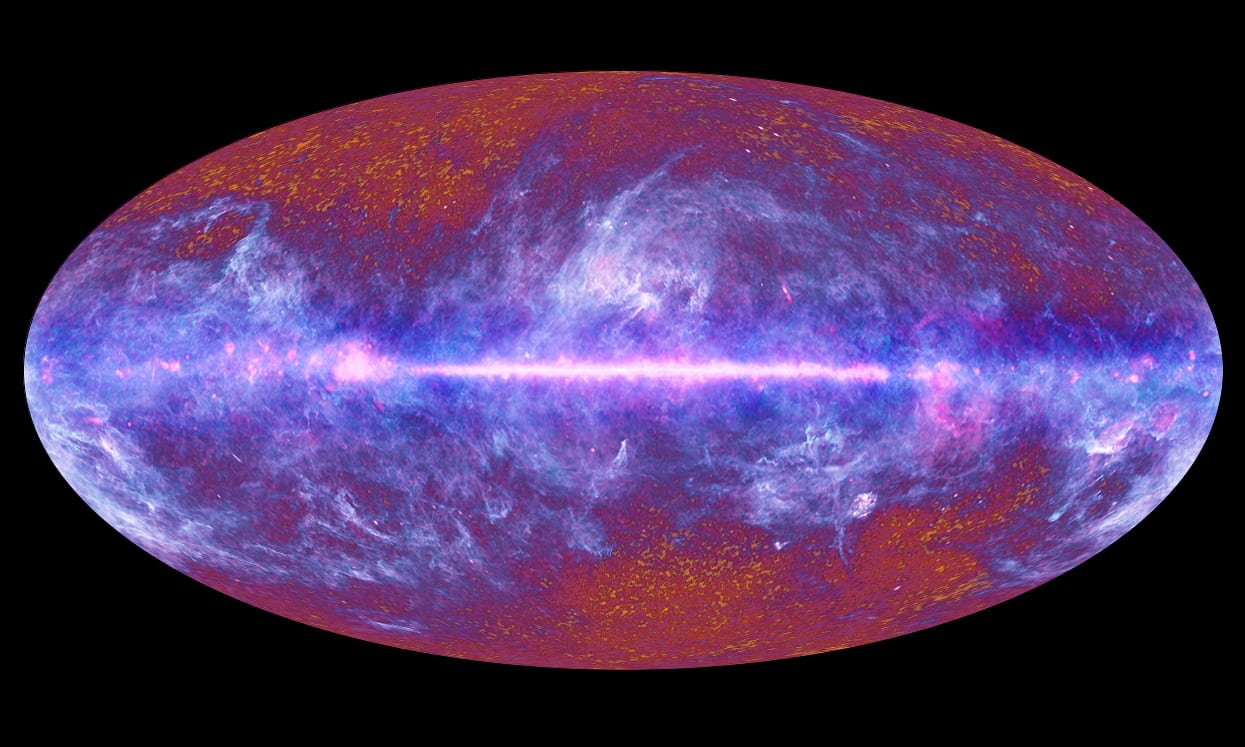
The conundrum first arose from measurements of radiation left over from the Big Bang, which allowed scientists to calculate how much matter there is in the universe and what form it takes. This showed that about 5% of the mass in the universe comes in the form of ordinary matter, with the
rest being accounted for by dark matter and dark energy.

Dark matter has never been directly observed and the nature of dark energy is almost completely mysterious, but even tracking down the 5% of ordinary stuff has proved more complicated than expected. When scientists have counted up all the observable objects in the sky – stars, planets, galaxies and so on – this only seems to account for between a 10th and a fifth of what ought to be out there.

BBC writes on a different note that scientist have confirmed psilocybin’s effects on mental health adding to its reputation as "lubricant for the mind". The study, published in the journal Scientific Reports, showed psilocybin affected two key areas of the brain.
  • The amygdala - which is heavily involved in how we process emotions such as fear and anxiety - became less active.
  • The default-mode network - a collaboration of different brain regions - became more stable after taking psilocybin.
It is quite curious that meditation practice has the same effect in particular on the amygdala as the Scientific American reports, prompting me to express here two rather obvious observations – let scientist do the drudgery of proofing them.

1.There are two paths to change our own mental outlook: the first involves daily meditation practice (or other physical atonement exercises like Yoga, Tai Chi, Feldenkrais Method, etc.) over a continuous stretch of at least 21 days resulting in a change of our neurological setting. The second involves a chemical reboot with substances like psilocybin. I clearly argue here for a preference of meditation over the use of chemical substances, but concede that humanity at this point of ecological devastation and its excessive focus on personal profit might do good in resetting its neuronal circuitry collectively. Elon Musk seems to think with Neuralink along these lines, but has put his money on technology instead of fungi. 

2. Astronomers, and not only them, will at one point realize that dark matter is what humanity has yet to unearth, but will never be visible to our ordinary senses which have been designed by evolution to understand the material world. Vision, hearing, taste, smell and touch are given to use to perceive ordinary matter. It is our heart which makes the dark matter visible. Once we understand, a vast realm of consciousness will open up, waiting for us to be tapped into. Once we understand, we won’t fear economic recession, because we will experience the abundance of less.

The crisis is a crisis in consciousness. […] Man is still aggressive, competitive, acquisitive and he has built a society along these lines. […] Its no measure of health to be adjusted to a profoundly sick society. [Jiddu Krishnamurti]
0 Comments

On the Purpose of Essay Writing

10/14/2017

1 Comment

 
Picture
Recently received this message by one of my readers:

Good writers often struggle with too much to say. They have a great idea, and they want to dazzle the reader with their knowledge and insight, and as a result, they often try to cram too much information into their writing. This is particularly true for the essay writer. Essays like this lead the reader to be confused, overwhelmed, or irritated. Readers like to walk away with new understanding or a fresh look at what they already know, and if they can't find "the point" in your writing, then they won't find time to read your ideas, no matter how great they are.

My reply is this:

Essays have two main purposes:

  1. they are an attempt of the author to wrap his mind around a subject
  2. they are an attempt of the author to accomplish 1. and give digestible take aways to the reader.

mine are mostly 1. I occasionally try to provide some take aways, but I believe that there are already enough people writing neat junks on linkedin structured in 3 paragraphs, 7 dos and 9 donts, that it doesn't need me to add more thereto; and there are even more people flushing their thoughts down twitter.

not everything we do, we do for others, but in the first place for ourselves.

when I set up dark matter essay in 2012, i wrote in the about page the following lines, and after rereading them, I believe they are still true:

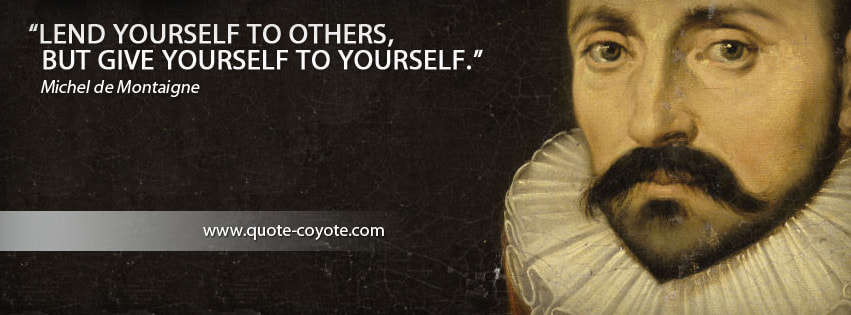
This site is about dark matter the way I see it. Hence, this site is written in the form of an essay. the word essay derives from the French infinitive essayer, "to try" or "to attempt". In English essay first meant "a trial" or "an attempt", and this is still an alternative meaning. Michel de Montaigne (1533–1592) was the first author to describe his work as essays; he used the term to characterize these as "attempts" to put his thoughts into writing. In astronomy, dark matter is a type of matter hypothesized to account for a large part of the total mass in the universe. Dark matter cannot be seen directly with telescopes; evidently it neither emits nor absorbs light or other electromagnetic radiation at any significant level. Instead, its existence and properties are inferred from its gravitational effects on visible matter, radiation, and the large-scale structure of the universe. Dark matter is estimated to constitute 83% of the universe, whereas ordinary matter makes up only 17%.

Since many years I have had the impression that although mankind exists since roughly one million years and man lives in so called civilizations for some thousand years, much that needs to be taught in society's educational bodies is actually not, and much that should be known is neither. It seems that we are fed with visible ordinary matter, but all the dark matter stays in the dark. I always had these questions that neither I could answer myself nor could I find others' satisfactory answers. why are we? [the most intriguing answer so far: 42. found in Douglas Adam's A Hitchhiker's Guide to the Galaxy] and if given the fact that we are, how to make the best of our existence? what are the rules that should guide our life? where and whom can we learn them from? do they come from within? or does society have to instill them into us? is there a middle path, like the Buddhists claim, that leads to liberation? or is life just non-sense? if it is not, what matters and what doesn't? what makes some people succeed in life but others not? what is success? how can it be measured? why are success and happiness quite often different things? what are the ingredients for a blooming society? a strong state or a strong citizen or both? on this site I try to collect some dark matter that matters to me; and some things that are rather profane, but keep me interested in life.


Where is the Life we have lost in living?
Where is the wisdom we have lost in knowledge?
Where is the knowledge we have lost in information?
[T. S. Eliot in The Choruses]

1 Comment

    Categories

    All
    Aging
    Art
    Atonement
    Austria
    Bottom Up Focus
    Buddhism
    Calexico
    Capitalism
    Children
    China
    Cinema
    Climate Change
    Csr
    Democracy
    Denmark
    Digital Media
    Economics
    Education
    Enlightenment
    Europe
    Famous Quotes
    Football
    Hamburg
    Hansa
    Happiness
    Health
    History
    Humor
    Hungary
    Ibizagate
    Individuation
    Innovation
    Integration
    Kiting
    Kurt Schuschnig
    Learning
    Life Guidance
    Love
    Medicine
    Meditation
    Memory
    Meritokratie
    Music
    Nationalism
    Neos
    Nepotismus
    Neurology
    Neuroscience
    Nutrition
    Oxytocin
    Parenting
    Philippines
    Politics
    Psychology
    Religion
    Research And Development
    Scandinavia
    Sebastian Kurz
    Slovakia
    Snowboarding
    Spain
    Sports
    Success
    Suffizienz
    Taiji
    Taoism
    Taxation
    Technology Transfer
    Top Down Focus
    Traffic
    Travel
    Turkey
    Urbanization
    Vikings
    Wise Living
    Work
    Writing
    Yoga

    Archives

    August 2025
    January 2024
    July 2023
    June 2023
    March 2023
    January 2023
    November 2022
    September 2022
    May 2022
    March 2022
    February 2022
    December 2021
    March 2021
    January 2021
    December 2020
    November 2020
    July 2019
    February 2019
    November 2018
    October 2018
    April 2018
    March 2018
    January 2018
    December 2017
    October 2017
    August 2017
    May 2017
    April 2017
    January 2017
    November 2016
    October 2016
    September 2016
    August 2016
    July 2016
    June 2016
    May 2016
    February 2016
    January 2016
    December 2015
    November 2015
    October 2015
    September 2015
    August 2015
    July 2015
    May 2015
    April 2015
    March 2015
    February 2015
    January 2015
    November 2014
    September 2014
    August 2014
    July 2014
    June 2014
    May 2014
    April 2014
    January 2014
    December 2013
    November 2013
    October 2013
    September 2013
    August 2013
    July 2013
    May 2013
    April 2013
    March 2013
    February 2013
    September 2012
    February 2012
    January 2012
    August 2009

    RSS Feed

Powered by Create your own unique website with customizable templates.